
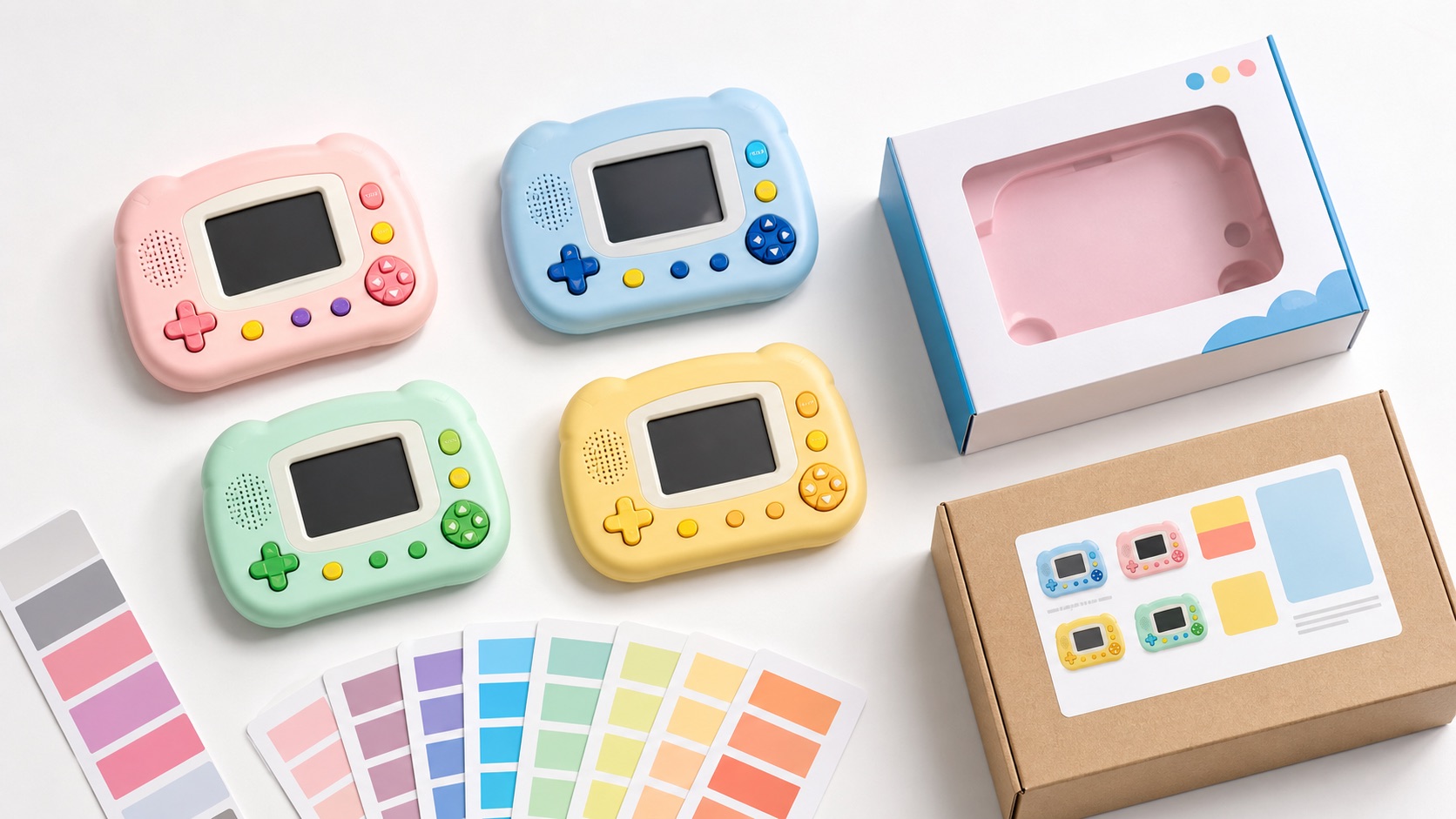
OEM educational toy customization starts with a specific product model. Branding, colors, packaging, language and learning content are useful areas to discuss, but the available changes depend on that model's structure, electronics and content format. A new function may need separate development rather than a simple change to a standard product.
This guide helps educational toy brands, importers, schools and STEM course providers prepare a practical project brief. Use it to separate what you want to keep, what you want to change and what needs confirmation. For YSGO's service overview, see OEM/ODM educational toy customization.
Start With the Model and Customization Depth
Choose a reference model before preparing final artwork or recordings. If you have not selected one, send the intended activity, target age group, market and product format so the discussion can start with suitable options.
Separate your requirements into three areas:
- Branding and packaging: Logo placement, proposed colors, printed materials and packaging for a selected model. Confirm the available surfaces, materials and packaging dimensions before finalizing artwork.
- Language and learning content: Scripts, recordings, questions, illustrations and instructions where the chosen model supports them. Confirm the content format and interaction limits first.
- Product development: Changes to structure, electronics, play logic or module combinations. Treat these as requirements for feasibility review until the scope, sample plan and commercial terms are agreed.
These areas can overlap. A change that appears to be cosmetic may affect materials or tooling; a new language may affect more than the recordings. Ask for a written scope that identifies the standard configuration, proposed changes and any unresolved development items.
Logo, Colors and Packaging
Branding should work across the product, its instructions and its packaging. Start with a vector logo, color references and a marked image showing the preferred logo position. Confirm the application method and usable area for the selected housing. Approve a physical sample for color and finish instead of relying only on a screen image.
For packaging, describe how the product will be sold, received or distributed. A distributor may need retail artwork, item codes and master-carton information. A school or course provider may need a clear kit label, a packing list and instructions for distributing materials. These are project requirements to review, not packaging formats automatically included with every model.
Prepare the following before artwork approval:
- Brand artwork, color references and the person responsible for approval.
- Product model, agreed contents and any accessories supplied separately.
- Packaging language, item codes, barcode information and required label text.
- Proposed pack format, quantities per pack and delivery destination.
- Any retailer, importer or institution requirements that affect the package.
Confirm the packaging dimensions and artwork template with the project team before creating print-ready files. Product photos, included-item lists and instructions should all describe the same configuration.
Language, Audio and Learning Content
A language project needs more than a list of words to translate. The wording, pronunciation, answer logic and printed content must work together on the selected device. Agree who supplies, reviews and approves each element before recording or formatting begins.
For a content review, prepare:
- Audience and purpose: Intended age group, language or dialect, subject and activity.
- Scripts and answers: Prompts, answer keys, feedback wording and pronunciation notes.
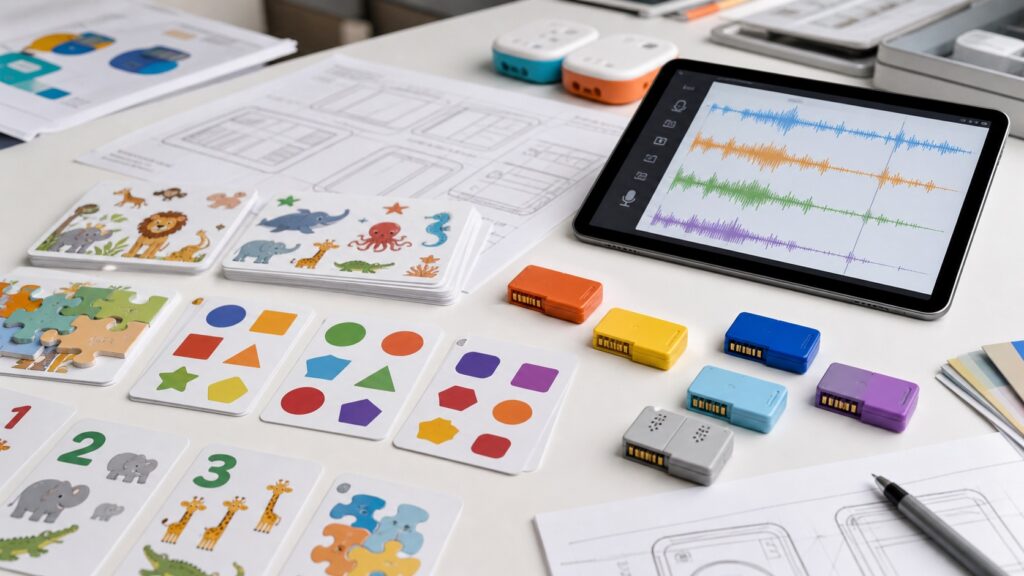
- A content map: A simple table matching each button, card, cartridge or activity reference to the intended prompt, response and audio file, where applicable to the model.
- Artwork and recordings: Available source files, with clear names and version numbers. Confirm the required file format before preparing the full set.
- Responsibilities and rights: Who approves educational accuracy and language quality, and who can authorize use of the text, illustrations, music and recordings.
Start by reviewing one representative activity before producing the full content set. On the sample, check that the displayed or printed item, spoken prompt and response agree. If a curriculum requirement matters, provide the exact learning task and acceptance criteria; a curriculum name alone does not establish a match.
Keep Product-Line Capabilities Separate
Use the product lines to explore options, then confirm the details for the exact model:
- Y-Card Learning Players: Confirm the supplied content carrier, its interaction method and the content version. A card or electronic cartridge for one model should not be assumed to work with another.
- Y-Pen Smart Learning Pens: Confirm the supported learning materials and how the pen interacts with them. Do not plan a project on the assumption that a pen can read any book or printed sheet.
- STEM Logic Thinking Training Blocks: Match the intended activity to the actual modules and included components. Confirm any additional materials needed to complete it.
- Y-Challenge Chess & Memory Games: Review the selected model's rules, controls and feedback. A game described as having an AI mode does not establish generative-AI or open-ended conversation capability.
- Y-Phone & Y-Pad Early Learning Toys: Review the model's learning activities and controls. These are toy formats; their names do not establish smartphone or Android tablet functionality.
For a multi-product range, a shared visual identity is a separate decision from content or accessory compatibility. Record compatibility only for combinations that have been checked.
Function and Module Changes Need a Feasibility Review
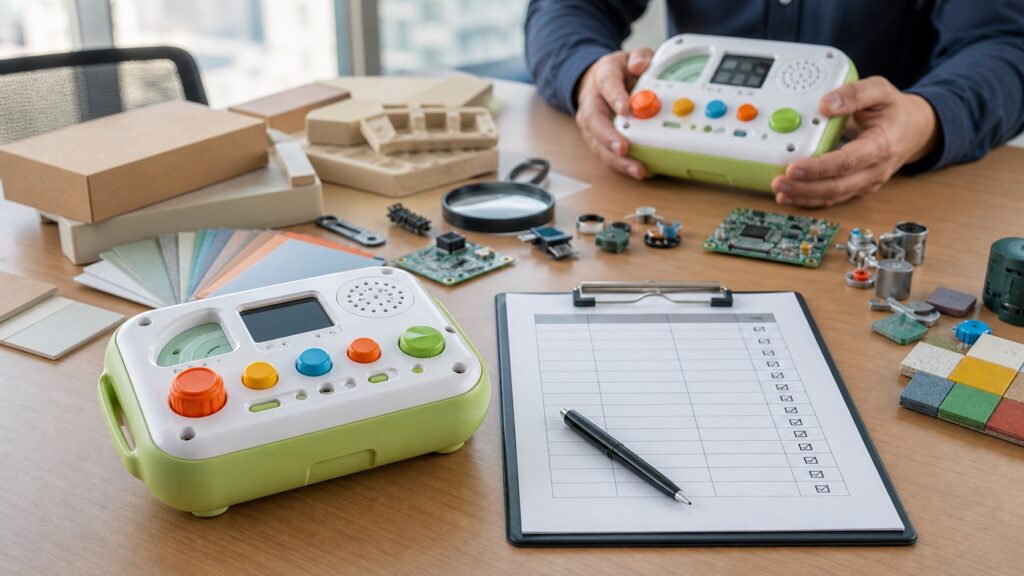
Describe the interaction you need in practical terms: what the user does, what the toy should do in response, and how you will judge whether it works. Include the intended environment, required accessories and any equipment it must work with.
The review should identify whether the requirement fits an existing model or would change its hardware, software, structure, power system or content format. A feature shown on another YSGO model is not confirmation that it can be added to the selected product.
Separate must-have requirements from optional changes. Before proceeding, agree which items will be demonstrated in the sample, which need further development and which are outside the proposed scope. A concept image or requested feature list is not a production specification.
How to Discuss Cost, MOQ and Schedule
Request a quotation for a defined configuration. State the quantity by model, language and packaging version, and distinguish an initial order from possible repeat orders. Do not assume that quantities across different versions can be combined to meet a minimum order quantity.
Ask the quotation to separate the product price from any applicable sampling, development, tooling, packaging or testing charges, and to identify its delivery terms. MOQ, sample availability and timing need confirmation for the selected model and changes; this guide does not set a standard quantity or lead time for all projects.
Share your required arrival date and destination. A useful schedule distinguishes content preparation, sample review, any required testing, production and transport. Agree the start conditions and approval responsibilities so a target launch date is not mistaken for a confirmed shipment date.
Sample Confirmation Before Mass Production
Agree the purpose of each sample and the approvals required for the project. Not every project needs the same sequence of prototypes or samples. An appearance sample may leave content or function unfinished, so its approval should identify exactly what has been accepted.
Use a review record covering four areas:
- Appearance: Model, colors, logo position, finish and visible parts.
- Function and content: Controls, interaction, feedback, language, audio and the agreed learning activities.
- Configuration and packaging: Included components, separately supplied accessories, instructions, labels and packaging artwork.
- Production reference: Sample identification, approved specification and file versions, open points, approval date and responsible reviewers.
For teaching or course use, try the agreed activity with the sample. Record the preparation, operation, reset and storage steps, as well as any extra materials or adult guidance needed. Describe the observed activity rather than assuming a measured learning improvement.
Before authorizing production, resolve or explicitly agree how to handle open points. Keep the approved reference sample and files identifiable so both parties can use the same reference when reviewing the order.
Record Changes and Confirm Repeat-Order Versions
When a script, component, color or package changes, record what changed, which model and version it affects, and whether the existing sample approval still applies. Confirm any effect on price, schedule, inspection or testing before adopting the revision.
For a repeat order, reference the previous approved configuration and list any requested differences. Reconfirm the current model, content and packaging versions. A familiar product name alone is not enough to identify the contents of the next shipment.
Quality Checks and Target-Market Requirements
Define the inspection and documentation requirements for the product you are ordering. YSGO's quality and testing support covers the project discussion around materials and assembly, function and learning content, packaging, and pre-shipment checks. Agree which checks apply to your configuration and whether customer or third-party inspection is required.
Keep three parts of the discussion clear:
- Market requirements: Destination country, intended age group, product use and any importer or retailer requirements. For the United States, identify applicable Consumer Product Safety Improvement Act (CPSIA) requirements as part of the review; CPSIA is legislation, not the name of a single test.
- Testing scope: The applicable standards, test methods and sample configuration, including materials and electrical features where relevant. Agree these with the responsible quality team and testing provider.
- Supporting documents: Request the available documents for the exact model and version, and review what they cover. A report for another product or an earlier configuration does not by itself establish coverage for a customized order.
Changes to materials, components, content or packaging should be reviewed for their effect on the agreed requirements. Branding does not automatically give a product market approval, and a generic list of standards or conformity marks is not a substitute for product-specific evidence. The CPSC overview of CPSIA provides the official U.S. legislative context.
Prepare Your Customization Inquiry
You do not need every detail finalized to start a conversation. Send what is known and identify decisions still to be made.
| Project information | What to send |
|---|---|
| Product and purpose | Model or reference, intended users, target age group, sales channel or teaching activity |
| Destination | Target market and delivery destination; relevant importer, retailer or institution requirements |
| Quantity | Initial quantity by model and version; repeat-order expectations if known |
| Changes | What stays standard, requested changes, must-have requirements and optional items |
| Content and branding | Languages, scripts, artwork, available recordings, content rights and approval contacts |
| Configuration | Required components, extra materials, power or accessory requirements and proposed packaging |
| Budget and timing | Target budget, requested arrival date and any fixed project milestones |
| Approval and documents | Sample review responsibilities, inspection needs and required supporting documents |
You can use the existing OEM Customization Inquiry Checklist to organize your first brief. Confirm the current project-specific requirements with YSGO before treating a checklist entry as an agreed capability or order term.
Frequently Asked Questions
Can I keep the standard product and customize only the packaging?
You can request that scope. Identify the model and the packaging changes, then confirm the available format, labeling, quantity and commercial terms. Keep the agreed product contents visible in the packaging review.
Who should provide and approve the learning content?
Agree the responsibilities at the start. Tell YSGO which scripts, artwork and recordings you can supply and what assistance you need. Name the people who will approve language, educational accuracy and usage rights. Content development or localization support should be confirmed in the project scope.
Can I use the same learning content across different products?
Only where the particular models, carriers and content formats have been confirmed compatible. Matching branding or subject matter does not establish technical compatibility. Provide the exact models and intended content combination for review.
Can I get a quotation before all artwork is finished?
Share the selected model, quantity, market and intended changes. Ask which assumptions the quotation uses and which items remain subject to confirmation. Update the scope when the approved artwork, content or configuration changes.
Discuss Your OEM Customization Project
Send your selected model or product idea, target market, estimated quantity and the changes you want to make. Include the learning task or sales-channel needs when they affect the product choice.
Contact YSGO to discuss your project, or review the OEM/ODM service overview before preparing your brief.
